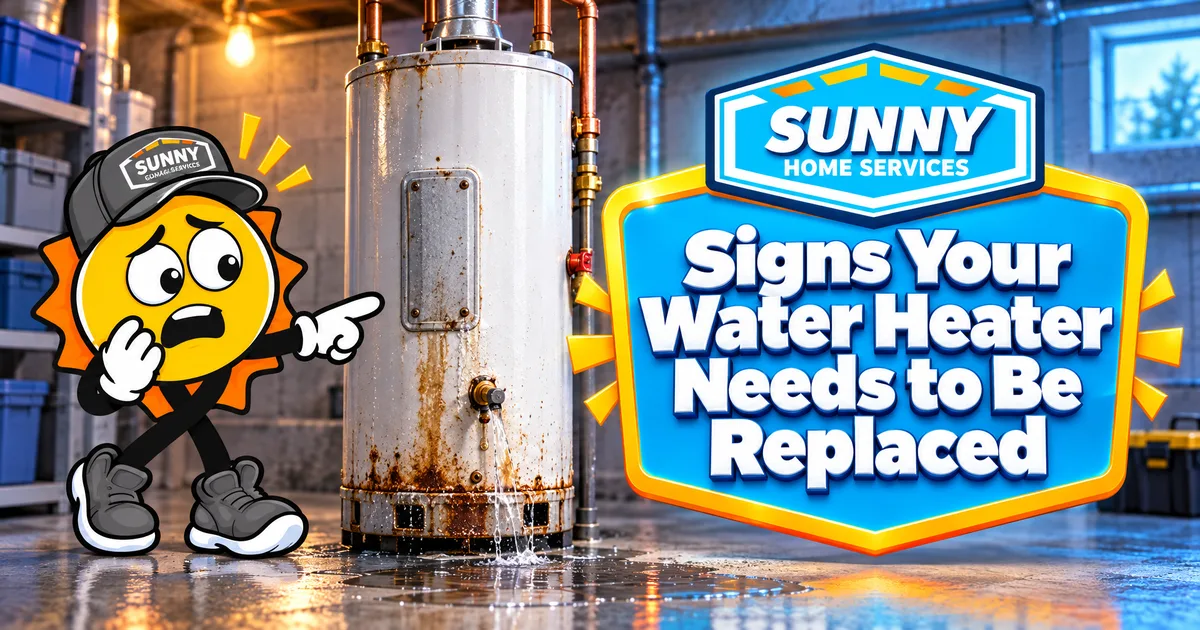
Rusty, discolored water and lukewarm temperatures aren’t just an inconvenience, they can also be signs that your water heater needs to be replaced. We’ll explore how to tell that your hot water heater is going bad and what to do about it with our water heater replacement guide for homes on the Wasatch Front.
If you’re wondering when it’s time to get a new water heater, these common issues may be signs that your system is in need of replacement.
What it means: Visible rust on the body of your water heater tank means that your water heater is suffering from significant corrosion. What to do: You’ll likely need to replace the tank itself. Since this is a significant and costly component to replace, it’s usually more cost-effective to replace the entire water heater.
What it means: Depending on where the water is leaking from, leaks or pooling can indicate corrosion or damage to the tank, or problems with the seams and fittings. What to do: While smaller fittings are usually quick to replace, significant damage to the tank typically means you’ll need to replace your water heater unit.
What it means: Rusty, discolored water or water that smells like rotten eggs indicates rust and corrosion inside your water heater system. The rust may be inside the tank itself, or it can be caused by an old anode rod. What to do: If rust is caused by the anode rod, your plumber can usually replace this part quickly and easily. If the rust is inside the tank, it may be time for water heater replacement.
What it means: Lukewarm water or insufficient hot water can be caused by several issues, including major sediment buildup on the bottom of the tank or a broken heating element. What to do: If the issue is caused by sediment, your plumber can flush your water heater and this will usually fix the problem. If it’s caused by a broken heating element, you can decide between fixing or replacing the heating element or replacing your water heater, depending on the age of the system.
What it means: Most traditional tank water heaters last between 10 and 15 years. Knowing the age of your water heater could help you plan for repair and replacement options. What to do: If your water heater is reaching the end of its expected lifespan and requires moderate to significant repairs, it’s usually recommended to replace the entire unit.
What it means: If your water heater is using more energy than normal to heat the same amount of water, it usually indicates an aging system that’s no longer running efficiently. What to do: Your plumber can perform a water heater maintenance inspection to determine the source of the inefficiency. Your system may require repairs if there is a broken part, or you may want to consider replacement if the overall unit is no longer efficient.
Learn what a bad water heater sounds like and what different noises mean so you can get to the bottom of your water heater issues.
Over time, mineral sediment builds up on the bottom of your water heater tank, making it more difficult for your unit to heat up water. Bubbles get trapped under this sediment, leading to loud noises like popping, rumbling, and cracking as they move through the sediment.
When inlet or outlet valves inside your water heater become clogged with debris, it’s more difficult for water to move through the valve. High-pressure water trying to flow through clogged valves can cause a screeching or whining noise.
Sizzling or hissing noises occur when water comes into contact with a hot element. This can indicate issues with your heating element, condensation problems, or mineral build-up inside the system.
Salt Lake Valley’s water is considered to be hard, meaning it has a high concentration of minerals including calcium and magnesium. When water gets heated up inside your water heater, the minerals harden into a limescale sediment that can interfere with your water heater’s functioning. As limescale builds up on the bottom of your tank, it forces your heating element to work harder to heat the water. This can lead to lukewarm temperatures, reduced hot water volume, higher energy bills, and loud noises coming from your unit. Routine annual water heater maintenance is the best way to prevent build-up and keep your system running smoothly.
Not sure where to start? A technician can look at it the same day and tell you what it needs.
Key factors like the age of your water heater and the extent of repair is required can help you decide whether to repair, replace, or upgrade your water heater.
It’s usually recommended to repair your water heater if you have a relatively new system that only requires minor to moderate repairs. This can include things like a broken or corroded anode rod, mineral buildup inside your tank, broken valves, and similar issues.
You may want to replace your water heater if it’s older than 10 years and requires moderate to significant repairs, such as replacing a fully rusted water tank. In general, if repairs are estimated to cost more than 50% of the value of a new unit, it’s a good idea to consider water heater replacement.
You may want to consider upgrading to a tankless water heater if it’s time to replace your current water heater and you’re interested in a more energy-efficient system. Tankless water heaters heat water on demand, meaning that they don’t use any excess energy keeping water hot while you’re not using it. This can significantly reduce your home energy bills, and also means you have a continuous supply of hot water.
When you need water heater and gas line services on the Wasatch Front, count on the pros at Sunny Home Services for expert solutions. Contact us today to discover how our enterprise-grade scheduling, upfront pricing, and professional service can support your home.



When you need HVAC and plumbing services along the Wasatch Front, count on Sunny Home Services for fast, honest, technology-driven solutions. With same-day response, upfront flat-rate pricing, and heating, cooling, and plumbing all under one roof, you’ll have a company you can trust for the whole home.