
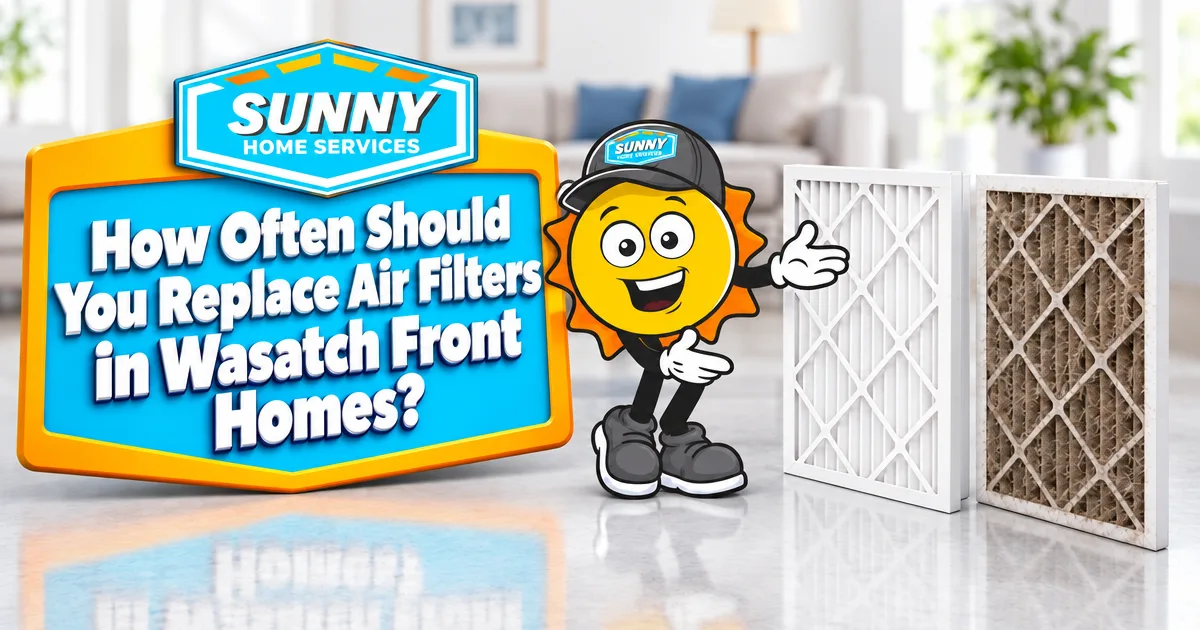
Swapping out an old, dirt-caked filter for a new and clean air filter is a DIY-friendly job, but it’s sometimes forgotten or completed infrequently. If you’re not sure how often to change your HVAC air filter, it’s a good idea to learn why regular replacements matter and the signs your filter needs replacing. Get a step-by-step overview of how to switch out the filter yourself to enjoy better home comfort and system efficiency between professional maintenance visits from Sunny Home Services.
The typical HVAC filter replacement schedule for Wasatch Front homes is about every 30 to 60 days. HVAC air filters can last up to 90 days before they become ineffective, but the environment of the Wasatch Front, filter type, and factors specific to your home may require more frequent replacements. During peak periods of HVAC demand in the winter and summer, plan to change the filter every 30 days. In addition to heavy usage, HVAC systems are subjected to severe winter inversions and particulate pollution that doubles each day, as well as summer wildfire smoke and local dust. Most Wasatch Front homes use their HVAC year-round, so filter replacements are still important in the shoulder seasons. In the fall and spring, change the filter every 30 to 60 days. Additionally, filters with high MERV ratings catch more particles but also clog faster than thinner filters. How often air filters are changed also depends on pets, household size, allergies, and other factors. 5-Inch Filter Replacement Schedule If your system has enough space, a 5-inch media filter is standard with a new furnace installation. These thicker filters have more surface area than standard filters, which allows for higher filtration up to a MERV 16 rating. They also last much longer and only need to be replaced every 6 to 12 months. We recommend inspecting your 5-inch filter monthly starting at the 6-month mark to see how much dust and debris it has collected.
Knowing the signs that your air filter needs changing allows you to notice and address warnings promptly. Watch for these signs:
Not sure where to start? A technician can look at it the same day and tell you what it needs.
If you don’t change your filter, your cooling and heating system is more likely to break down and interrupt your home comfort.
When dust and debris completely coat the filter, the blower motor must strain to circulate air through the system. Lower air volume through vents extends cooling or heating cycle durations as the system struggles to match temperature demands, resulting in higher energy consumption and utility bills.
Restricted airflow from clogged filters impacts components throughout the HVAC system, potentially causing problems such as frozen evaporator coils, faulty electrical components, burnt-out motors, or an overheating compressor. These issues have a compounding effect and accelerate system wear, which then increases the risk and frequency of breakdowns. Certain breakdowns of major components, such as failed motors or compressors, can also have high repair costs.
Restricted airflow and irregular cycles prevent your system from properly circulating and evening out temperatures and humidity. Some areas of your home may have hot or cold spots, and secondary issues resulting from clogged filters can also prevent your system from generating or transferring heat correctly.
Clogged air filters are unable to trap airborne particles, so contaminants like dust, pet dander, pollen, and mold spores recirculate throughout your HVAC system and impact indoor air quality. With the mountain barriers of the Wasatch Front trapping stagnant air and smog along the valley floor, airborne contaminants are even more likely to enter your HVAC system and trigger or exacerbate allergies, asthma, and other conditions.
Constantly restricted airflow and equipment strain cause premature wear on your HVAC system. Without regular filter replacements and system tune-ups, your heating and cooling units may fail years before a well-maintained system and require a replacement sooner than expected.
Major HVAC manufacturers frequently require you to complete basic upkeep and schedule professional maintenance with Sunny Home Services to keep your warranty valid. Failing to replace air filters regularly may void your warranty and leave you responsible for repair costs in case of a defective part.
To change your air filter, follow these straightforward steps:
As an optional extra step, make a recurring calendar reminder in your phone to inspect the filter every 30 days. Keep extra air filters stocked to make replacements more convenient.
Keep your HVAC running smoothly year-round with regular air filter checks and replacements. The Sunny Home Services team can help with professional HVAC repair and maintenance. Serving the Wasatch Front, Sunny Home Services combines the honest, upfront approach of a local business with the enterprise-grade scheduling and dispatch technology of a larger company. We offer upfront, flat-rate pricing that you approve before any work begins. Contact us today to schedule HVAC services.


When you need HVAC and plumbing services along the Wasatch Front, count on Sunny Home Services for fast, honest, technology-driven solutions. With same-day response, upfront flat-rate pricing, and heating, cooling, and plumbing all under one roof, you’ll have a company you can trust for the whole home.